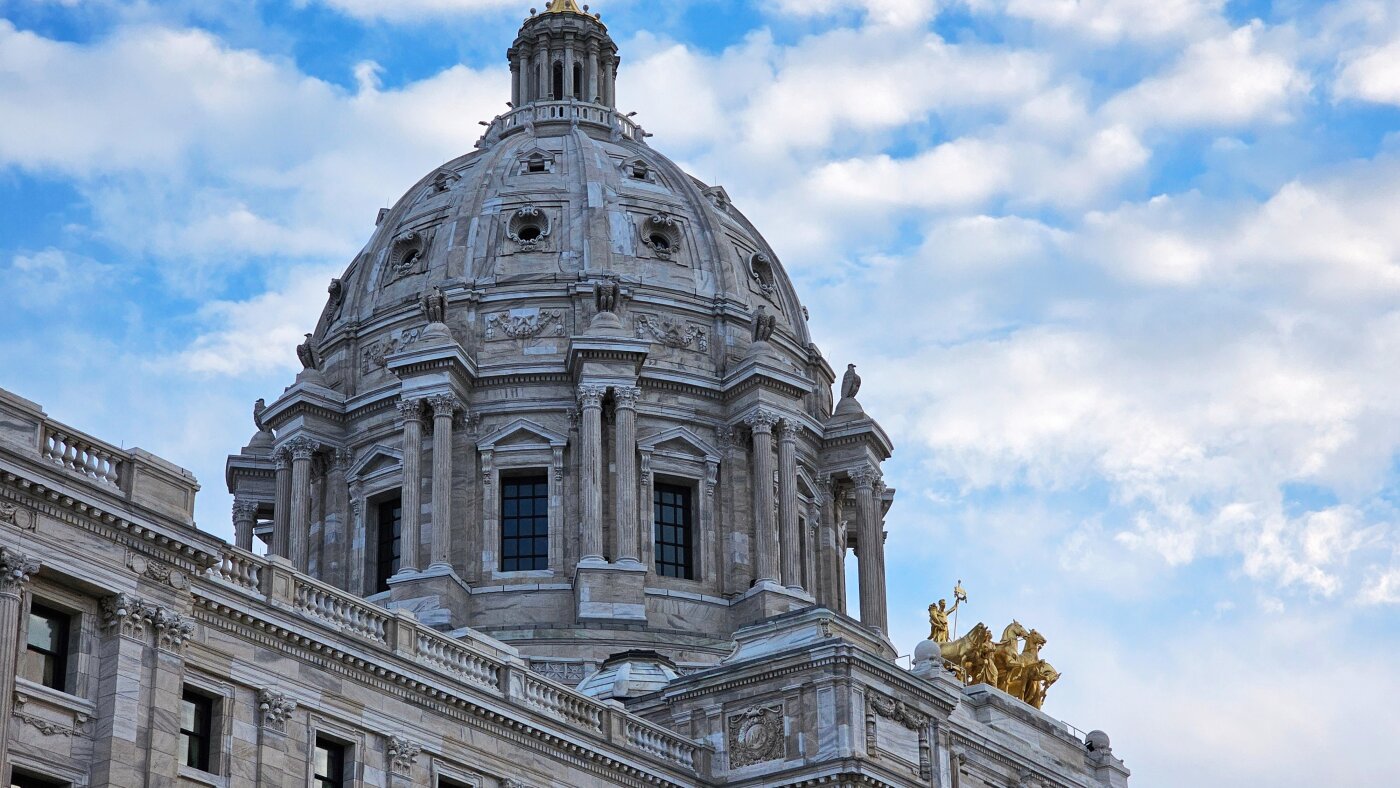
Users receive financial insights covering earnings reports, stock volatility, and macroeconomic developments. Minnesota has become the first U.S. state to pass a law making it a felony for companies like Kalshi and Polymarket to operate prediction markets within its borders. The move escalates state-level opposition to the controversial industry, which has faced legal scrutiny in dozens of other states but never a criminal ban.
Live News
Minnesota Becomes First State to Criminalize Prediction Markets, Setting National PrecedentInvestors increasingly view data as a supplement to intuition rather than a replacement. While analytics offer insights, experience and judgment often determine how that information is applied in real-world trading.- Felony classification: Minnesota is the first state to criminalize prediction market operations, setting a new precedent beyond civil penalties.
- Targeted platforms: The law specifically applies to companies like Kalshi and Polymarket, which permit event-based trading on political, sports, and economic outcomes.
- National context: Dozens of other states have taken legal action against prediction markets, but none had previously passed a criminal ban. The Minnesota law could embolden other states to consider similar measures.
- Federal ambiguity: The CFTC has been deliberating on rulemaking for event contracts, but no nationwide framework exists. State-level bans may create a patchwork of regulations that complicate compliance for platforms.
- Industry response: Prediction market operators have historically defended the legality of their contracts under federal commodity law, suggesting potential legal challenges to the Minnesota statute.
Minnesota Becomes First State to Criminalize Prediction Markets, Setting National PrecedentStructured analytical approaches improve consistency. By combining historical trends, real-time updates, and predictive models, investors gain a comprehensive perspective.Historical precedent combined with forward-looking models forms the basis for strategic planning. Experts leverage patterns while remaining adaptive, recognizing that markets evolve and that no model can fully replace contextual judgment.Minnesota Becomes First State to Criminalize Prediction Markets, Setting National PrecedentIncorporating sentiment analysis complements traditional technical indicators. Social media trends, news sentiment, and forum discussions provide additional layers of insight into market psychology. When combined with real-time pricing data, these indicators can highlight emerging trends before they manifest in broader markets.
Key Highlights
Minnesota Becomes First State to Criminalize Prediction Markets, Setting National PrecedentMany investors underestimate the psychological component of trading. Emotional reactions to gains and losses can cloud judgment, leading to impulsive decisions. Developing discipline, patience, and a systematic approach is often what separates consistently successful traders from the rest.In a legislative first, Minnesota has enacted a law that classifies operating prediction markets as a felony offense, targeting platforms such as Kalshi and Polymarket that allow users to wager on the outcomes of events like elections, sports, and economic indicators. The law represents a significant escalation in state-level efforts to curb the industry, which regulators have long argued blurs the line between gambling and financial speculation.
While dozens of states have previously taken legal action—ranging from cease-and-desist orders to civil penalties—Minnesota is the first to impose criminal liability. Companies found in violation could face felony charges, potentially leading to fines and prison time for executives. The law applies to any prediction market platform that offers contracts to Minnesota residents, regardless of where the company is headquartered.
The move comes amid ongoing federal uncertainty. The Commodity Futures Trading Commission (CFTC) has proposed rules to ban certain event contracts, but the timeline for finalization remains unclear. Proponents of the Minnesota law argue that prediction markets amount to unregulated gambling that can distort public perceptions and facilitate manipulation. Opponents, including industry advocates, counter that such markets provide valuable data on future events and should be treated as a form of financial innovation.
Representatives for Kalshi and Polymarket have not yet publicly commented on the Minnesota legislation. Both companies have previously argued that their platforms are legal under federal commodity laws and have challenged state actions in court.
Minnesota Becomes First State to Criminalize Prediction Markets, Setting National PrecedentMarket participants often refine their approach over time. Experience teaches them which indicators are most reliable for their style.Diversification in analytical tools complements portfolio diversification. Observing multiple datasets reduces the chance of oversight.Minnesota Becomes First State to Criminalize Prediction Markets, Setting National PrecedentHigh-frequency data monitoring enables timely responses to sudden market events. Professionals use advanced tools to track intraday price movements, identify anomalies, and adjust positions dynamically to mitigate risk and capture opportunities.
Expert Insights
Minnesota Becomes First State to Criminalize Prediction Markets, Setting National PrecedentTrading strategies should be dynamic, adapting to evolving market conditions. What works in one market environment may fail in another, so continuous monitoring and adjustment are necessary for sustained success.Legal analysts suggest that the Minnesota law could trigger a broader reevaluation of how prediction markets are regulated across the United States. If other states follow suit, companies like Kalshi and Polymarket may face significant operational hurdles, potentially limiting their user base and increasing compliance costs.
From a regulatory perspective, the felony provision marks a sharp departure from civil enforcement and may deter smaller platforms from entering the market. However, the legal landscape remains uncertain: the Commodity Exchange Act grants the CFTC exclusive jurisdiction over certain commodity contracts, and courts may need to clarify whether state criminal laws conflict with federal authority.
For investors and market participants, the development introduces new risk factors. Companies operating prediction markets may need to reassess their geographic exposure and legal strategies. While the industry has argued that event contracts offer valuable forecasting tools, the Minnesota law underscores growing political and public resistance. Observers will watch for similar legislative efforts in other states, as well as any federal response that could either harmonize or further fragment the regulatory environment.
Minnesota Becomes First State to Criminalize Prediction Markets, Setting National PrecedentHistorical patterns can be a powerful guide, but they are not infallible. Market conditions change over time due to policy shifts, technological advancements, and evolving investor behavior. Combining past data with real-time insights enables traders to adapt strategies without relying solely on outdated assumptions.While technical indicators are often used to generate trading signals, they are most effective when combined with contextual awareness. For instance, a breakout in a stock index may carry more weight if macroeconomic data supports the trend. Ignoring external factors can lead to misinterpretation of signals and unexpected outcomes.Minnesota Becomes First State to Criminalize Prediction Markets, Setting National PrecedentTracking order flow in real-time markets can offer early clues about impending price action. Observing how large participants enter and exit positions provides insight into supply-demand dynamics that may not be immediately visible through standard charts.